

Can You Drive with Bad Shocks or Struts? 10 Signs You Shouldn’t Ignore
A smooth, controlled ride is something most drivers take for granted—until every pothole feels like a crater and your vehicle starts bouncing over bumps. While many people blame tires or road conditions, the real culprit is often worn shocks or struts.
The bigger question is: Can you continue driving with bad shocks or struts? The short answer is yes—but you shouldn’t for long. These suspension components are essential for maintaining tire contact with the road, improving braking performance, and keeping your vehicle stable during turns and emergency maneuvers.
In this guide, you’ll learn how to identify failing struts without visiting a mechanic, the risks of delaying replacement, and when it’s time to invest in new suspension parts.
What do shocks and struts actually do?
Before diagnosing the problem, it’s important to understand their role.
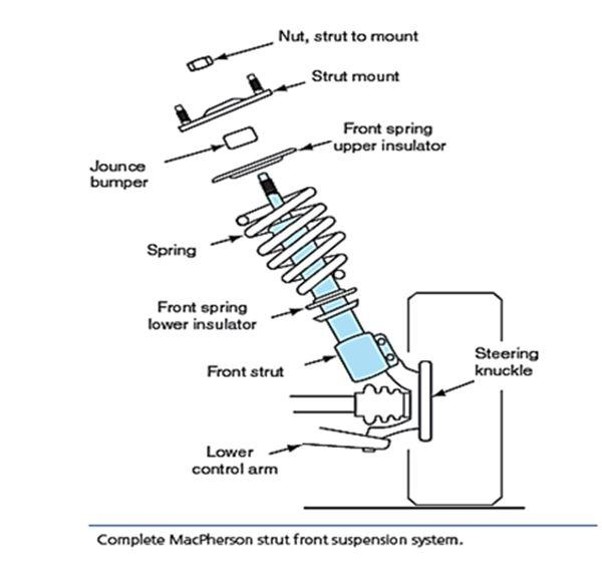
Although people often use the terms interchangeably, shocks and struts are different components:
- Shock absorbers control excessive bouncing by dampening spring movement.
- Struts combine a shock absorber with structural suspension components and help support the vehicle’s weight.
Both perform the same primary job: keeping your tires firmly planted on the road for maximum control and comfort.
Can you drive with bad shocks or struts?
Technically, yes. Safely, not for long.
Unlike a flat tire, worn shocks rarely fail overnight. They gradually lose their ability to control suspension movement, which makes the problem easy to ignore. However, continuing to drive with worn suspension can increase stopping distance, reduce steering response, and cause uneven tire wear.
Here's what can happen:
|
Problem
|
Why it matters
|
|---|---|
|
Longer braking distance
|
Tires lose consistent road contact
|
|
Excessive body roll
|
Reduced stability during cornering
|
|
Nose-diving while braking
|
Less predictable emergency stops
|
|
Tire cupping
|
Expensive premature tire replacement
|
|
Driver fatigue
|
Constant bouncing reduces comfort and control
|
If your vehicle feels unstable at highway speeds or bounces excessively after hitting a bump, it’s best to inspect the suspension as soon as possible.
10 signs your struts are bad (without a mechanic)
The good news is that you don’t always need specialized tools to recognize the warning signs. Many symptoms are noticeable during everyday driving.
1. Your car keeps bouncing after a bump
This is the classic symptom of worn shocks.
Drive over a speed bump at a safe speed. If the vehicle continues bouncing more than once or twice, the dampers may no longer be controlling the suspension effectively.
2. The front end dives when braking
Does the nose of your car dip dramatically whenever you brake?
This happens because weakened struts can’t resist forward weight transfer, making braking feel less controlled and increasing stopping distance.
3. The rear squats during acceleration
If the back of your truck or SUV drops noticeably while accelerating, worn rear shocks may be allowing excessive suspension movement.
This is especially common in pickups that regularly carry heavy loads.
4. Your steering feels loose
A healthy suspension provides confident steering feedback.
If your steering feels vague, wanders on the highway, or requires constant correction, worn struts could be affecting wheel alignment and stability.
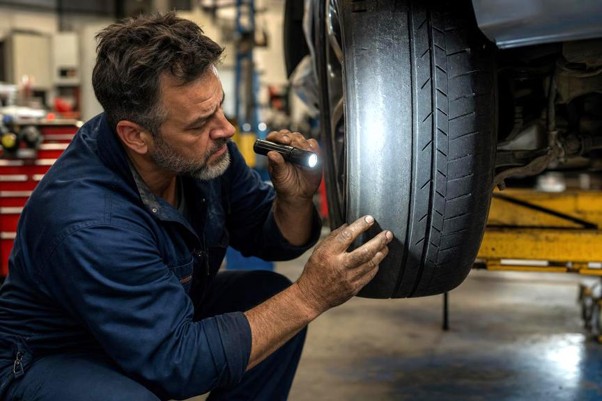
5. Uneven tire wear
Take a look at your tires.
If you notice cupping or scalloped wear patterns, the suspension may be allowing the tires to bounce instead of maintaining even contact with the pavement.
6. Clunking or knocking noises
A metallic clunk when driving over potholes often indicates worn strut mounts or internal strut damage.
While other suspension parts can create similar noises, it’s a strong reason to inspect the front suspension.
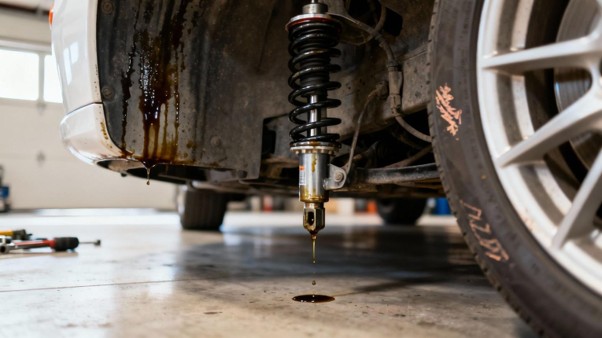
7. Fluid leaking from the shock
Look behind each wheel.
If the shock absorber is covered in oily fluid, the internal hydraulic seal has likely failed. Once fluid escapes, damping performance drops significantly.
8. Excessive body roll in turns
If your vehicle leans much more than it used to while cornering, worn dampers may no longer be controlling weight transfer effectively.
This becomes especially noticeable during highway ramps.
9. The vehicle sits unevenly
Stand several feet away and compare both sides of the vehicle.
If one corner appears lower than the other, a damaged strut or spring may be contributing to uneven ride height.
10. The bounce test fails
Here’s a simple driveway test:
- Park on a level surface.
- Push down firmly on one corner of the vehicle.
- Release quickly.
A healthy suspension should rise and settle almost immediately. If it continues oscillating multiple times, the shock or strut is likely worn.
Why delaying replacement costs more
Many drivers postpone suspension repairs because the vehicle is still drivable. Unfortunately, worn shocks often create a chain reaction of additional expenses.
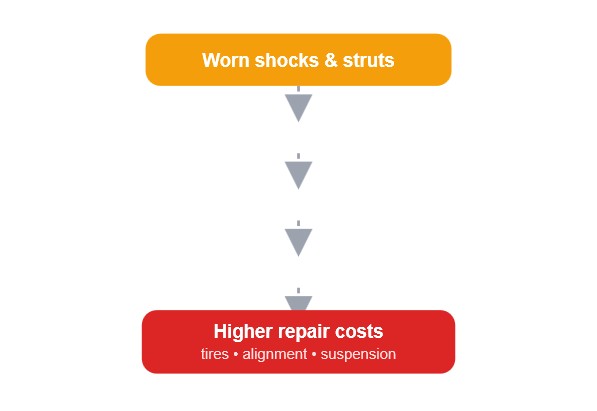
Replacing shocks at the right time can help protect:
- Tires
- Ball joints
- Control arms
- Wheel bearings
- Steering components
In many cases, replacing worn struts early is considerably less expensive than replacing tires damaged by uneven suspension wear.
When should shocks and struts be replaced?
There’s no universal mileage because driving conditions vary. Vehicles driven on rough Canadian roads, gravel, or through frequent potholes generally experience faster suspension wear than those driven mostly on highways.
A practical rule is to have the suspension inspected whenever you notice ride quality changes or around 80,000–100,000 km (50,000–60,000 miles), depending on manufacturer recommendations and driving habits.
Should you replace one or both?
The answer is almost always both.
Replacing shocks or struts in pairs (left and right) helps maintain balanced handling, even braking, and consistent ride quality. Installing one new strut beside one worn unit can create uneven suspension performance and shorten the lifespan of the new component.
DIY inspection checklist
Use this quick checklist before scheduling a repair:
- Vehicle bounces repeatedly after bumps
- Nose dives during braking
- Steering feels loose at highway speeds
- Clunking noises over potholes
- Oily fluid visible on shocks
- Uneven or cupped tire wear
- Excessive body roll while turning
- Vehicle sits unevenly
If you checked two or more, your suspension deserves a closer inspection.
Final thoughts
Bad shocks and struts don’t just affect comfort—they directly influence braking, handling, and overall driving safety. The earlier you recognize the warning signs, the more likely you’ll avoid costly tire damage and additional suspension repairs.
Whether you drive a Ford F-150, Chevrolet Silverado, GMC Sierra, Toyota RAV4, Honda CR-V, Jeep Wrangler, or Dodge RAM, keeping your suspension in top condition ensures better control on every journey.
Need replacement shocks or struts? Choose West Can Auto Parts
At West Can Auto Parts, we stock high-quality OEM and premium aftermarket shocks and struts for thousands of vehicle applications across Canada. Whether you’re looking for complete strut assemblies, heavy-duty truck shocks, or trusted brands for everyday passenger vehicles, our experienced parts specialists can help you find the right fit.
With fast 1–3 day shipping, competitive pricing, and knowledgeable customer support, West Can Auto Parts is your trusted destination for reliable suspension components that restore comfort, safety, and confidence behind the wheel.
Disclaimer:
This blog is for educational and informational purposes only. For accurate diagnosis and proper vehicle repairs, always consult a certified automotive technician.