

10 Signs of a Bad Ignition Coil: How to Test It & Can You Still Drive Your Car?
Your vehicle’s ignition system plays a crucial role in keeping the engine running efficiently, and one of its most important components is the ignition coil. While it may be small in size, a failing ignition coil can quickly lead to engine performance issues, reduced fuel efficiency, expensive catalytic converter damage, and even leave you stranded on the side of the road.
Many drivers ignore the early warning signs because the symptoms often resemble problems caused by worn spark plugs or fuel system issues. Recognizing these signs early can save both time and money.
In this guide, we’ll cover:
- The most common signs of a failing ignition coil
- How to test an ignition coil yourself
- Whether it’s safe to continue driving
- When it’s time to replace the ignition coil
What Does an Ignition Coil Do?
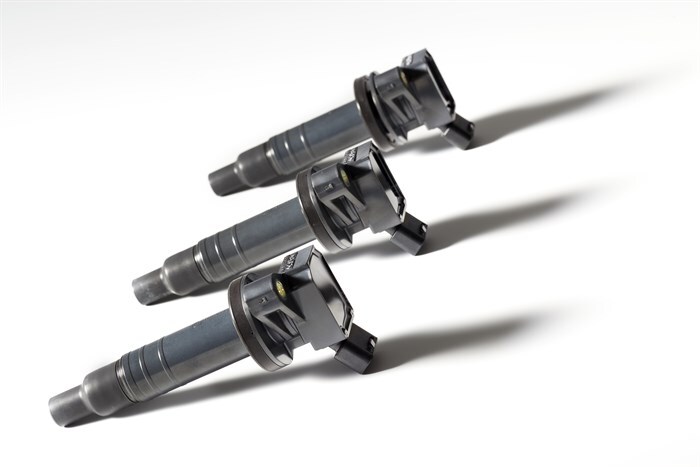
The ignition coil converts the vehicle’s 12-volt battery power into the tens of thousands of volts needed to create a spark at the spark plugs. That spark ignites the air-fuel mixture inside each cylinder, producing the combustion that powers your engine.
Modern vehicles often use Coil-on-Plug (COP) systems, where each cylinder has its own dedicated ignition coil. If one coil fails, the affected cylinder stops firing correctly, causing noticeable engine performance issues.
10 Signs Your Car Needs a New Ignition Coil
1. Check Engine Light Turns On
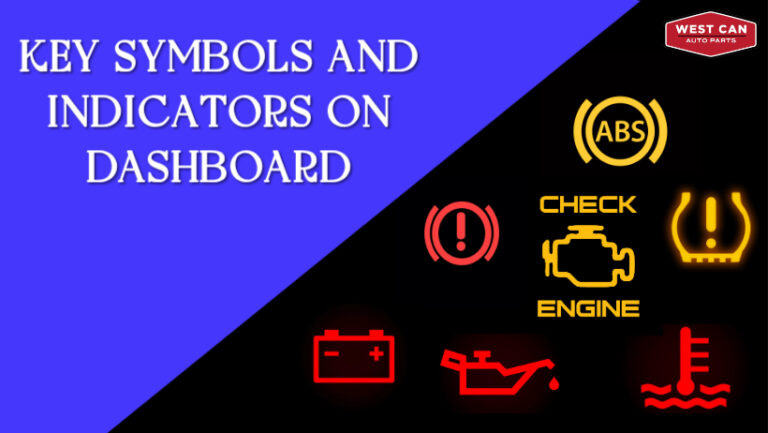
One of the earliest warning signs is an illuminated Check Engine Light. A failing ignition coil often triggers misfire-related diagnostic trouble codes such as P0300–P0308, depending on which cylinder is affected.
2. Engine Misfires
A bad ignition coil cannot consistently provide the high voltage needed to ignite the air-fuel mixture. This leads to engine misfires, which may feel like sudden jerks, hesitation, or stumbling during acceleration.
3. Rough Idle
If your engine vibrates excessively or feels unstable while idling, one or more ignition coils may not be firing properly.
4. Poor Fuel Economy
Incomplete combustion forces the engine to burn more fuel to produce the same amount of power, leading to noticeably lower fuel efficiency.
5. Loss of Power During Acceleration
A failing ignition coil often causes sluggish acceleration, particularly when climbing hills or merging onto highways.
6. Hard Starting
Weak spark output makes it difficult to ignite the air-fuel mixture, resulting in extended cranking or failure to start.
7. Engine Stalling
In severe cases, intermittent ignition coil failure can cause the engine to stall unexpectedly.
8. Backfiring
Unburned fuel entering the exhaust system may ignite there, causing loud popping sounds or backfires.
9. Increased Exhaust Emissions
Incomplete combustion produces higher hydrocarbon emissions, which can lead to failed emissions inspections where applicable.
10. Strong Fuel Smell
A faulty ignition coil can leave unburned fuel in the exhaust, producing a noticeable gasoline smell around the vehicle.
How to Test an Ignition Coil
Before replacing an ignition coil, it’s important to confirm that it’s actually the source of the problem.
1. Scan for Diagnostic Trouble Codes
Use an OBD-II scanner to check for engine misfire codes or ignition-related faults.
2. Perform a Visual Inspection
Look for:
- Cracked housing
- Burn marks
- Oil contamination
- Corrosion on electrical connectors
- Loose wiring
3. Swap Test
If your vehicle uses individual coil packs, move the suspected ignition coil to another cylinder. If the misfire code follows the coil, you’ve likely identified the faulty component.
4. Measure Resistance (If Applicable)
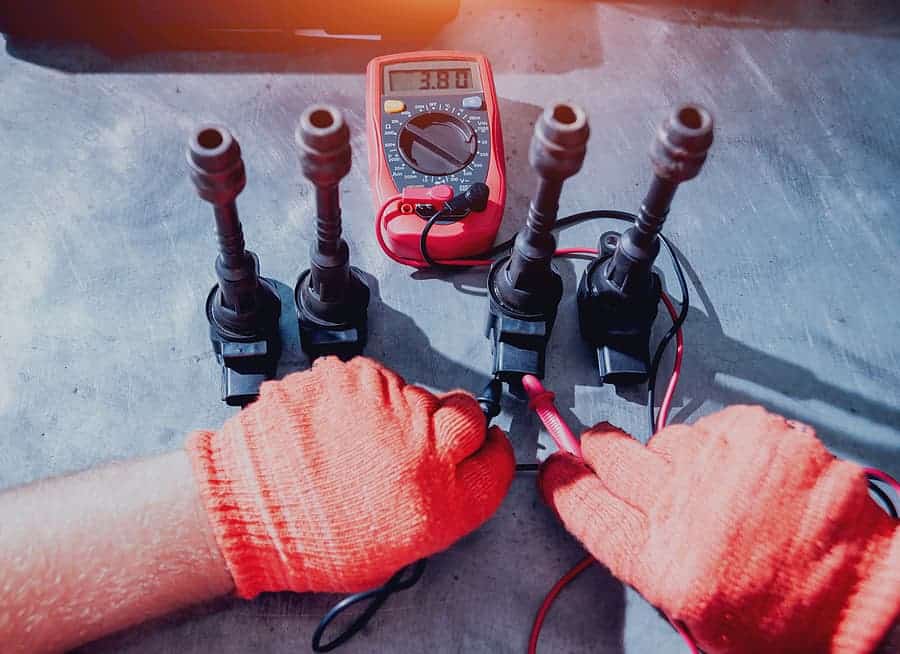
Some ignition coils can be checked with a digital multimeter by measuring primary and secondary winding resistance. Compare the readings with the manufacturer’s specifications.
5. Use a Spark Tester
A spark tester lets you verify whether the ignition coil is producing a strong, consistent spark.
Tip: Avoid removing spark plug wires or testing for spark by hand while the engine is running. Ignition systems generate very high voltage and can cause serious electric shock.
Can You Drive with a Bad Ignition Coil?
Technically, yes—but it’s not recommended.
If only one ignition coil has started to fail, the vehicle may still run. However, continuing to drive can create more serious and expensive problems.
Risks of Driving with a Faulty Ignition Coil
- Reduced engine performance
- Poor fuel economy
- Increased emissions
- Engine hesitation during overtaking
- Damage to the catalytic converter from unburned fuel
- Increased wear on spark plugs
- Risk of complete breakdown if additional coils fail
If your vehicle is misfiring, shaking excessively, flashing the Check Engine Light, or lacking power, it’s best to address the issue as soon as possible rather than continuing to drive.
When Should You Replace an Ignition Coil?
Replace the ignition coil if:
- Testing confirms it has failed.
- The housing is cracked or physically damaged.
- It repeatedly causes cylinder misfires.
- It fails electrical resistance or spark tests.
- It has been damaged by excessive heat, moisture, or oil contamination.
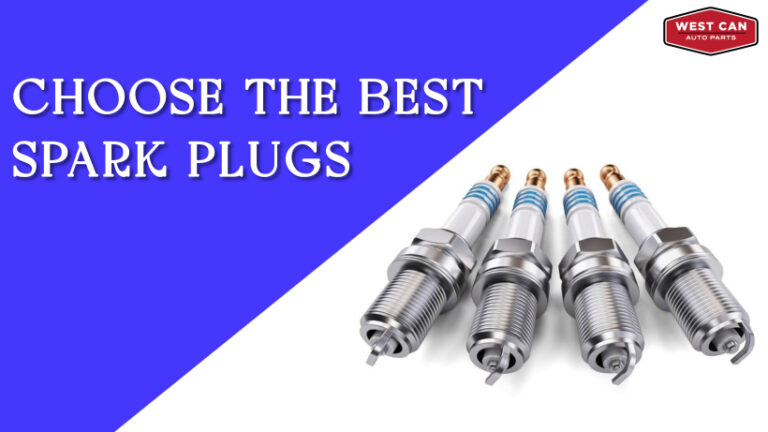
If the spark plugs are worn, replacing them at the same time can help extend the life of the new ignition coil and restore optimal ignition performance.

Frequently Asked Questions
Can a bad ignition coil damage the engine?
Indirectly, yes. Persistent misfires can damage the catalytic converter and place additional stress on engine components if left unresolved.
How long do ignition coils last?
Many ignition coils last between 100,000 and 160,000 km (about 60,000 to 100,000 miles), although their lifespan varies depending on driving conditions, heat exposure, and the quality of the ignition system.
Should I replace all ignition coils at once?
Not necessarily. If only one coil has failed, replacing that unit is often sufficient. However, on higher-mileage vehicles where multiple coils are the same age, replacing the full set may reduce the likelihood of future failures.
Can bad spark plugs ruin an ignition coil?
Yes. Worn or improperly gapped spark plugs force the ignition coil to work harder, increasing heat and electrical stress that can shorten its lifespan.
Final Thoughts
A failing ignition coil rarely fixes itself. What starts as an occasional hesitation or rough idle can quickly develop into persistent misfires, poor fuel economy, and costly repairs if ignored. By recognizing the warning signs early, testing the ignition coil correctly, and replacing it when necessary, you can keep your engine running smoothly, efficiently, and reliably.
Find Quality Ignition Coils at West Can Auto Parts
When it’s time to replace a faulty ignition coil, choosing a high-quality replacement is just as important as diagnosing the problem correctly. At West Can Auto Parts, we carry a wide selection of premium OEM and aftermarket ignition coils from trusted manufacturers for domestic, Asian, and European vehicles.
Whether you’re a DIY enthusiast or a professional technician, our knowledgeable team can help you find the right ignition coil, compatible spark plugs, and other ignition system components for your specific vehicle. With competitive pricing, fast shipping across Canada, and expert customer support, West Can Auto Parts is your trusted destination for dependable automotive replacement parts.
Need help finding the right ignition coil? Browse our online catalog or contact the West Can Auto Parts team today and get your vehicle back to peak performance with confidence.
Disclaimer:
This blog is for educational and informational purposes only. For accurate diagnosis and proper vehicle repairs, always consult a certified automotive technician.