

|

How to Read Your Vehicle’s VECI Label: A Complete Guide to Federal & California Emissions

Sharing is Caring

If you’ve ever opened your vehicle’s hood and noticed a small sticker filled with technical information, you’ve probably seen the Vehicle Emission Control Information (VECI) label.

At first glance, the label can look confusing. It may contain abbreviations, numbers, engine information, emissions-control equipment, certification statements, and other technical details.

But that small label can provide some of the most useful information when you’re trying to determine which emissions system your vehicle has and which replacement emissions parts it needs.

Whether you’re replacing a catalytic converter, oxygen sensor, or another emissions-related component, knowing how to read your VECI label can help you avoid ordering the wrong part.

Here’s what you need to know.

What Is a VECI Label?

VECI stands for Vehicle Emission Control Information.

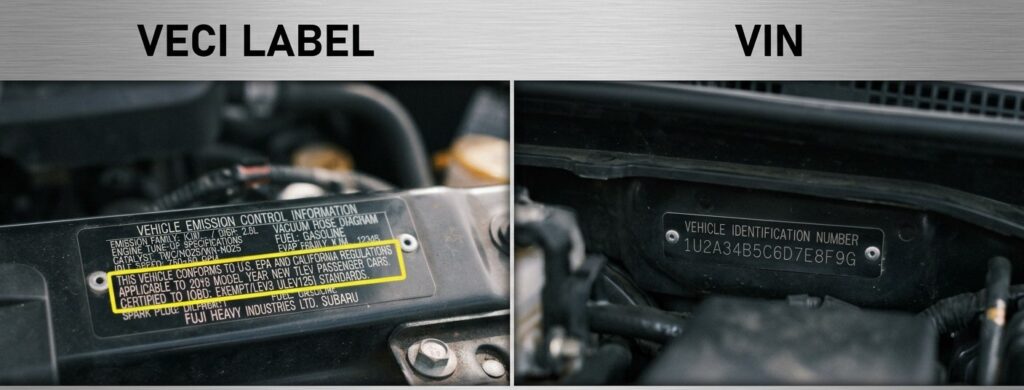
The VECI label is an emissions information label installed by the vehicle manufacturer. For light-duty vehicles, it is generally located in the engine compartment, often under the hood. The U.S. EPA describes the label as containing information such as the manufacturer’s name, trademark, and a statement of compliance with applicable emissions regulations.

The exact appearance and information can vary by manufacturer and model year, but the purpose is the same: to provide important information about the vehicle’s emissions-control system.

Where Can You Find the VECI Label?

The first step is finding it.

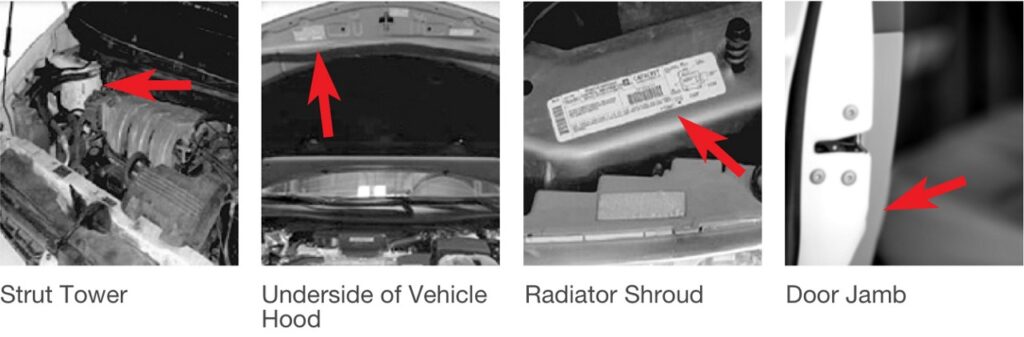
On most passenger vehicles and light-duty trucks, check the engine compartment carefully. Common locations include:

  • Underside of the hood
  • Radiator support
  • Engine compartment walls
  • Fender or inner body panels
  • Other clearly visible areas around the engine

The exact location varies between manufacturers.

If you don’t see it immediately, look around the entire engine compartment rather than assuming the vehicle doesn’t have one.

Tip: Take a clear photo of the label with your phone. This makes it easier to zoom in on small print and gives you a reference when discussing the vehicle with a parts specialist.

What Information Is on a VECI Label?

A VECI label can contain several different pieces of information. You don’t necessarily need to understand every line, but some sections are particularly useful.

1. Vehicle Emissions Certification

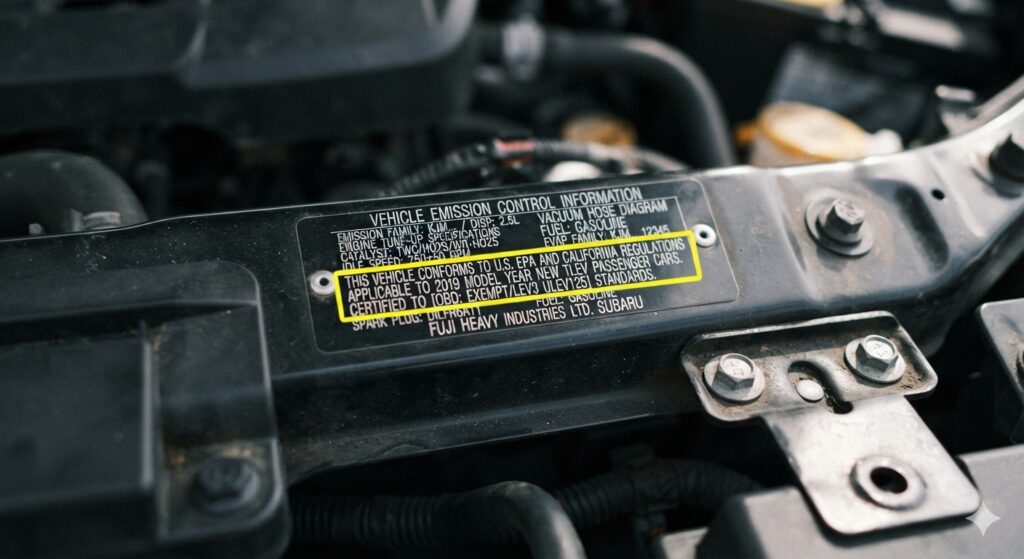
One of the most important things to look for is the certification or compliance statement.

Depending on the vehicle, the label may identify compliance with:

  • Federal emissions requirements
  • California emissions requirements
  • Both federal and California requirements

This information can help determine whether your vehicle requires a Federal/EPA or California/CARB-specific replacement part.

2. Engine Family or Test Group Number

Another important identifier is the Engine Family or Test Group number.

CARB explains that every vehicle sold in the United States has a unique drivetrain identifier known as a Test Group or Engine Family Number. This identifier can be used to determine the specifications and emissions-control equipment associated with a particular vehicle.

This is especially useful because the same model may have several different engine or emissions configurations.

In other words, two vehicles with the same:

  • Make
  • Model
  • Model year
  • Engine size

may still require different emissions parts.

The Test Group or Engine Family information can help narrow down the exact emissions configuration.

3. Engine Size and Configuration

Your VECI label may also identify the engine displacement and other engine-related information.

For example, you may see information referring to:

  • Engine displacement
  • Fuel type
  • Engine family
  • Model year
  • OBD certification

This information is useful when matching emissions components because parts catalogs often distinguish between applications based on engine and emissions configuration.

4. Emissions-Control System Information

The label may also identify the emissions-control equipment installed on the vehicle.

Depending on the vehicle, abbreviations may refer to systems such as:

  • Catalytic converter
  • Oxygen sensor
  • Exhaust gas recirculation (EGR)
  • Evaporative emissions system (EVAP)
  • Positive crankcase ventilation (PCV)
  • Secondary air injection
  • Other emissions-control components

Don’t worry if these abbreviations look unfamiliar. They are primarily there to identify the emissions-control system and provide service information.

5. OBD Information

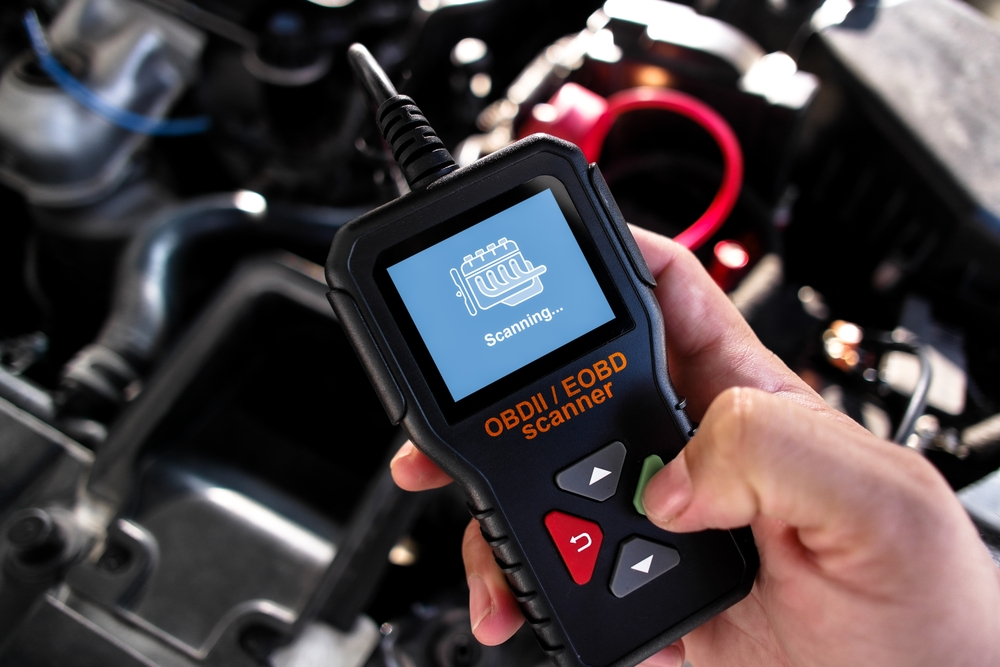
Many modern vehicles use OBD II, or On-Board Diagnostics II.

The VECI label may identify the vehicle’s OBD certification and other related information.

OBD is important because your vehicle’s computer continuously monitors various systems and can trigger the Check Engine Light when it detects certain emissions-related problems.

This is one reason replacing an emissions component with the wrong part can create problems even when the replacement physically fits.

How Does the VECI Label Tell You Federal or California?

This is one of the most common questions.

Look carefully at the certification language on the label.

A vehicle certified to California emissions requirements may have wording that specifically references California regulations. Some vehicles may also be identified as meeting requirements applicable across all 50 states.

A Federal vehicle may instead have a compliance statement referring only to applicable federal emissions requirements.

However, don’t rely on a single word or assume every manufacturer’s label looks the same.

The format and wording can vary by manufacturer and model year.

If you’re unsure, photograph the entire label and provide the vehicle’s VIN to a qualified parts professional. The VECI information can then be used together with manufacturer and parts-catalogue information to identify the correct application.

What If the VECI Label Is Missing or Damaged?

Older vehicles may have labels that have become faded, damaged, or difficult to read.

Engine repairs, repainting, accident damage, or previous work under the hood can also affect the condition of the label.

If you can’t read the label, don’t guess.

Your VIN can provide another important way to identify the vehicle’s configuration. A professional parts supplier can use the VIN alongside other vehicle information to determine the appropriate application.

For certain vehicles with unusual configurations, such as engine changes or grey-market vehicles, additional emissions information or a BAR Referee label may apply.

Why Does the VECI Label Matter When Buying Parts?

The VECI label becomes particularly valuable when you’re buying emissions-related components.

For example, a vehicle may have different applications for:

  • Catalytic converters
  • Oxygen sensors
  • Air-fuel ratio sensors
  • Exhaust components
  • EVAP components
  • Other emissions-control parts

A part that fits physically isn’t necessarily the correct emissions application.

That’s why year, make and model alone may not always be enough.

Checking the VECI label before ordering can give you valuable information that helps a parts specialist identify the correct component.

VECI Label vs VIN: Which Is Better?

The answer is: use both whenever possible.

The VECI label provides direct information about the emissions-control configuration installed on the vehicle.

The VIN identifies the specific vehicle.

When ordering an emissions component, providing both can give a parts specialist much more information to work with.

If you have access to the label, take a clear photo and keep your 17-character VIN ready.

How West Can Auto Parts Can Help

Understanding a VECI label can make emissions-part shopping much easier, but you don’t have to interpret every technical abbreviation yourself.

At West Can Auto Parts, our parts specialists can help you identify the correct application for your vehicle. Whether you’re looking for a catalytic converter, oxygen sensor, exhaust component, or another emissions-related part, having your VIN and VECI label information available can help us narrow down the right part.

With over four decades of experience supplying OEM and premium aftermarket parts and locations across British Columbia, West Can Auto Parts helps professional technicians, repair shops, DIY customers, and vehicle owners find the right parts for their applications.

If you’re unsure whether your vehicle uses a Federal or California emissions configuration, don’t guess based on appearance or price.

Take a photo of your VECI label, have your VIN ready, and talk to the parts experts at West Can Auto Parts before ordering.

Final Thoughts

The VECI label may look like a complicated sticker, but it contains valuable information about your vehicle’s emissions system.

By learning where to find it and understanding the key information it provides—especially the emissions certification, Engine Family/Test Group number, engine information, and emissions-control equipment—you can make smarter decisions when purchasing replacement parts.

And when you’re still unsure, remember one simple rule:

Check the label. Verify the VIN. Confirm the part before you buy.

Disclaimer:

This blog is for educational and informational purposes only. For accurate diagnosis and proper vehicle repairs, always consult a certified automotive technician.

Similar Posts

Leave a Reply

Your email address will not be published. Required fields are marked *