
|

Clutch Noise and Failure Guide: What Chirping, Grinding, and Slipping Really Mean

Sharing is Caring

A clutch doesn’t fail overnight—it unravels like a frayed rope, strand by strand, leaving behind hints that something is amiss. Many Canadian drivers only notice trouble once the vehicle jerks, shudders, growls, or refuses to shift smoothly. But long before that cinematic breakdown moment, the clutch whispers its warnings.

This guide brings two worlds together: the early signs of clutch failure and the strange noises that often accompany them. Consider it your roadside translator—decoding everything from pedal oddities to metallic murmurs.

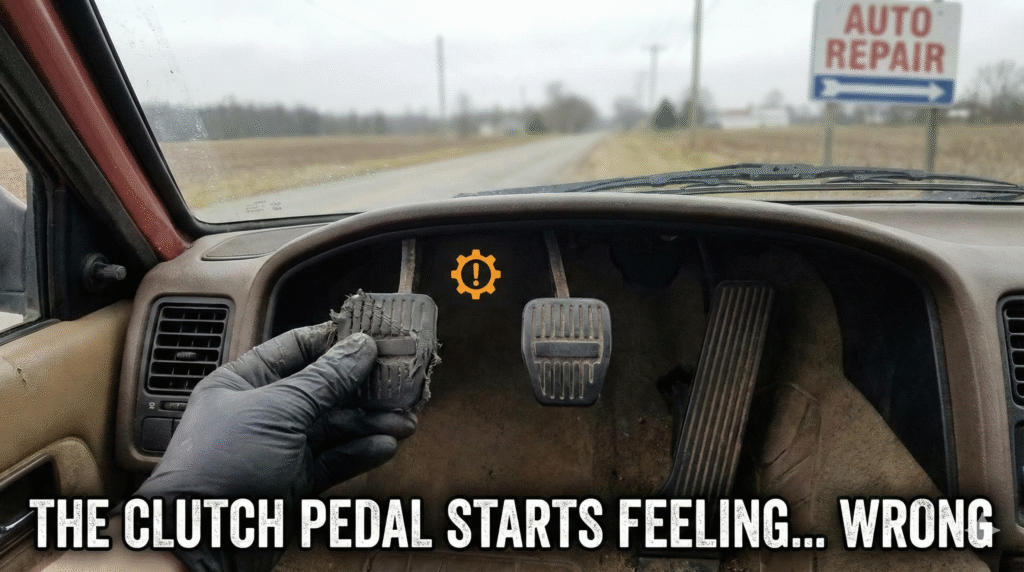
1. The Clutch Pedal Starts Feeling… Wrong

A healthy clutch pedal has a familiar rhythm, a kind of mechanical heartbeat. When that changes, your vehicle is sending you a memo you shouldn’t archive.

✔ Soft or Spongy Pedal

If your clutch pedal sinks too easily or feels like stepping into a loaf of wet bread, trouble is brewing. This often points to:

  • Low hydraulic fluid
  • Air in the hydraulic line
  • A failing master or slave cylinder

Left unchecked, the pedal may eventually stop engaging the clutch altogether—never fun on a rainy Wednesday commute.

✔ Stiff or Heavy Pedal

On the opposite end, a pedal that suddenly feels like you’re leg-pressing a brick can signal:

  • A worn clutch cable (in cable-operated systems)
  • A binding release mechanism
  • Pressure plate fatigue

Stiffness is the clutch equivalent of joints locking up, and it’s usually a prelude to bigger failure.

2. Slipping: When Your Clutch Loses Its Grip

Imagine revving enthusiastically, but the vehicle responds like it’s half-asleep. That disconnect—where engine speed surges but acceleration doesn’t—is the hallmark of clutch slip.

Common causes include:

  • A worn clutch disc
  • Heat damage or glazing
  • Weak pressure plate springs
  • Oil contamination from a leaking rear main seal

Slipping usually starts subtly, appearing during uphill drives or heavy loads. Over time, it becomes unavoidable, like trying to run on ice.

3. Gear Shifts Feel Crunchy, Sticky, or Just “Not Right”

Smooth gear changes should feel like pages turning in a well-worn book. If instead you’re met with hesitations, jolts, or resistance, your clutch may not be fully disengaging.

You may notice:

  • Difficulty shifting into first or reverse
  • Grinding when changing gears
  • A delay between shifting and response

Often, this is caused by hydraulic issues or a failing release bearing. Ignoring it can snowball into transmission gear damage—a repair bill no one wants.

4. Vibration & Shudder: The Clutch’s Silent Earthquake

If your vehicle trembles when you release the clutch—especially during first-gear takeoff—it may indicate:

  • Warped flywheel
  • Worn pressure plate
  • Oil contamination
  • Loose or broken engine/transmission mounts

The trembling feels like the vehicle is having second thoughts about moving at all.

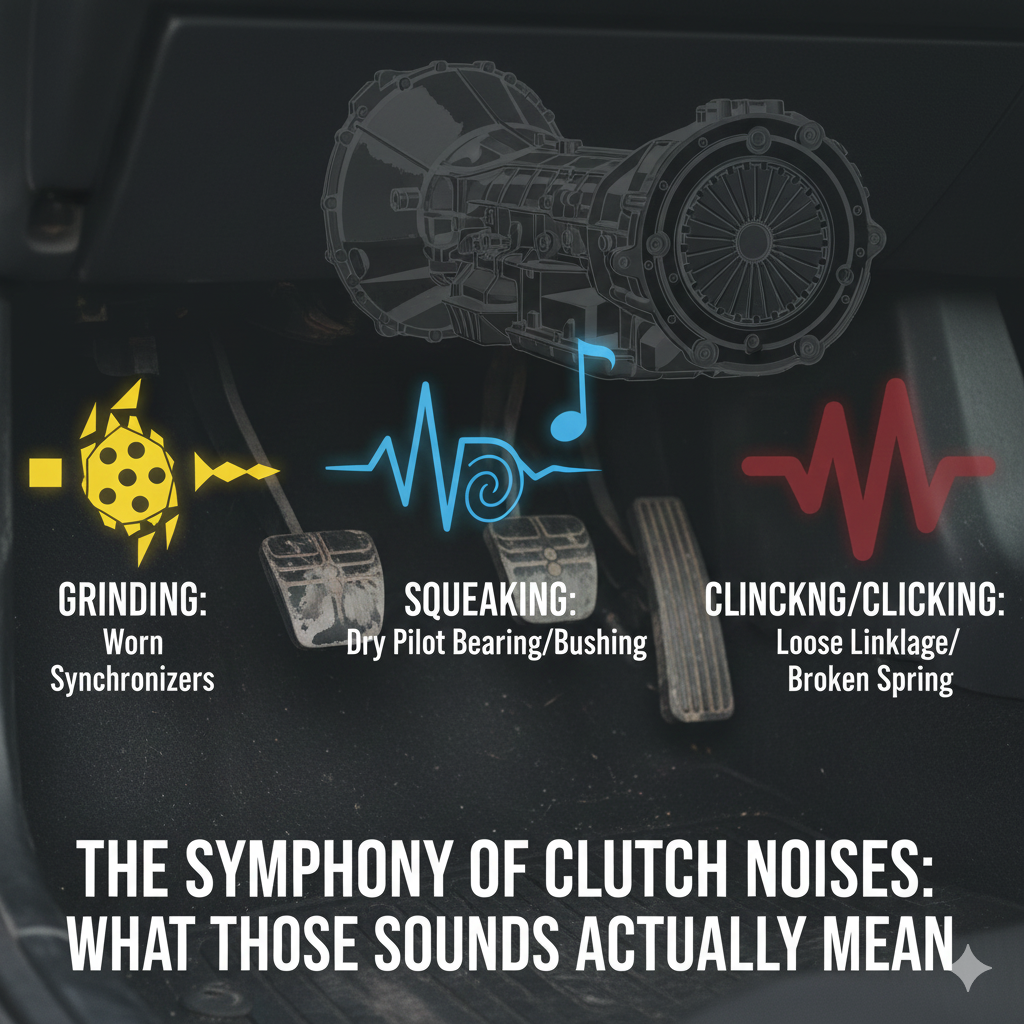
The Symphony of Clutch Noises: What Those Sounds Actually Mean

While symptoms speak in sensations, clutch problems also sing—sometimes subtly, sometimes like a metallic opera. Listening closely can save you thousands in repairs.

1. Chirping: A Light, Rhythmic Birdsong Under the Hood

A chirping noise when you press or release the clutch pedal usually points to a failing release bearing or pilot bearing.

  • Chirp on pedal press: Release bearing
  • Chirp on pedal release: Pilot bearing

The sound is small but deceptive; bearings that chirp today may screech tomorrow.

2. Grinding: The Harsh Truth You Can’t Ignore

Grinding often signals that the clutch isn’t disengaging fully, and the transmission’s synchronizers are being forced to do all the heavy lifting.

Possible causes:

  • Low hydraulic pressure
  • Worn clutch disc
  • Damaged release mechanism

Grinding gears repeatedly can scar your transmission—much costlier than a clutch job.

3. Squealing: The Clutch’s Cry for Help

A squeal that appears only when the pedal is pressed is commonly tied to a release bearing nearing failure or a dry pivot point.

If the sound grows louder under load, the bearing is likely degrading rapidly.

4. Rattling or Knocking: The Flywheel Joins the Chat

A rattling noise—especially at idle—may suggest trouble with the dual-mass flywheel (DMF). When its internal springs or damping components wear out, it sounds like metallic marbles tumbling inside a steel drum.

Other causes include:

  • Loose clutch components
  • Worn pressure plate fingers
  • Misaligned clutch assembly

Flywheel issues create vibrations that travel through the entire drivetrain.

When to Act: The Moment Diagnostics Become Decisions

Most clutch failures begin long before the vehicle becomes undrivable. If you notice:

  • Persistent pedal changes
  • Strange shudders
  • Any new or growing noise
  • Difficulty shifting
  • Slipping during acceleration

…it’s time for an inspection. Canadian driving conditions—cold mornings, steep urban hills, long highway stretches—accelerate clutch wear. Addressing symptoms early often keeps repairs simple.

Why West Can Auto Parts Is Your Go-To for Clutches & Flywheels

Whether you’re a DIY driver, a weekend wrench-turner, or a professional mechanic, West Can Auto Parts carries high-quality clutch kits, flywheels, release bearingshydraulic components, and related drivetrain parts from trusted brands. With nine BC locations, online ordering, and quick in-store pickup, keeping your clutch healthy has never been simpler.

Your vehicle’s clutch is the bridge between engine power and motion—keep it strong, responsive, and noise-free with the right parts and timely maintenance.

Disclaimer:

This blog is for educational and informational purposes only. For accurate diagnosis and proper vehicle repairs, always consult a certified automotive technician.

Similar Posts

Leave a Reply

Your email address will not be published. Required fields are marked *