

Oil and Coolant Leaks Explained: 14 Places to Check Beyond the Obvious
Oil and Coolant Leaks: What Your Vehicle Could Be Telling You
Noticed a dark spot on your driveway? Perhaps you have spotted a puddle of green, orange or pink fluid under your vehicle. While these signs may seem minor at first, they could indicate a problem that deserves attention.
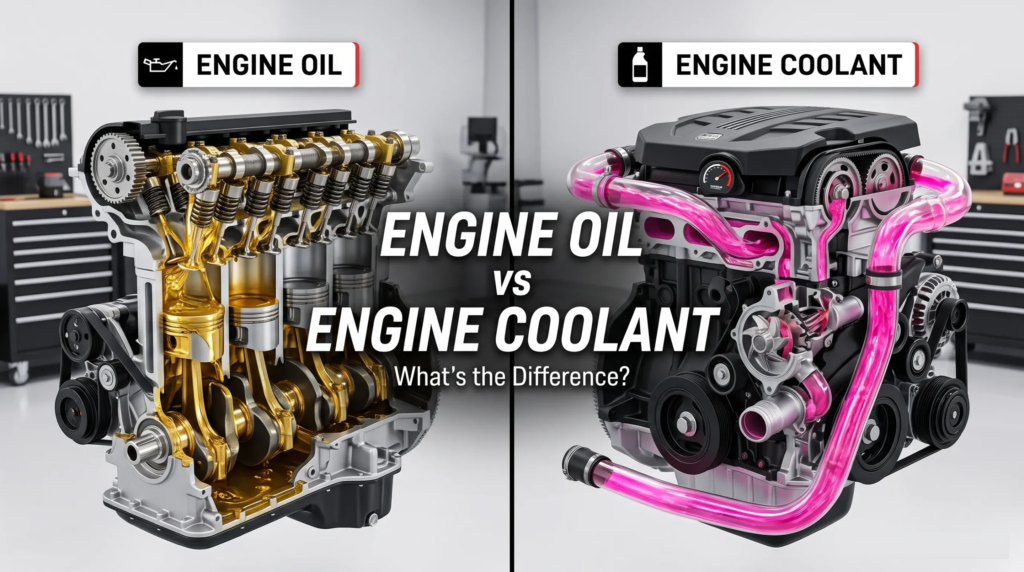
Engine oil and coolant are two of the most important fluids in your vehicle. Oil lubricates moving engine components, while coolant helps regulate engine temperature and prevents overheating. When either fluid begins to leak, it can affect engine performance, reliability and, in some cases, your safety.
The first instinct may be to blame the oil filter or radiator. However, leaks can originate from several other components, including gaskets, hoses, seals and connections.
Understanding where these leaks may come from can help you recognize potential problems before they become more serious.

1. Seven Common Places to Check for Engine Oil Leaks
1. Oil Filter and Oil Filter Housing
The oil filter removes contaminants from engine oil. If the filter is loose, damaged or fitted incorrectly, oil may escape around its seal.
In some vehicles, the oil filter attaches to a separate housing. A worn housing gasket or damaged housing can also cause leaks.
2. Valve Cover Gasket
The valve cover sits at the top of the engine and protects internal components. A gasket seals the gap between the cover and the cylinder head.
Over time, heat and engine vibration can cause the gasket to harden or deteriorate. Oil may then seep around the cover, sometimes leaving visible residue near the top or sides of the engine.
3. Oil Pan Gasket
The oil pan stores engine oil when the engine is not running. Its gasket helps prevent oil from escaping where the pan meets the engine.
A damaged gasket, loose fasteners or impact damage to the oil pan can lead to leaks underneath the vehicle.
4. Crankshaft and Camshaft Seals
These seals help prevent oil from escaping around rotating engine components.
As seals age, they may become brittle or worn. Leaks can develop near the front or rear of the engine, sometimes making the exact source difficult to identify without inspection.
5. Oil Cooler and Oil Cooler Gaskets
Some engines use an oil cooler to help control engine oil temperature.
The cooler, its connecting lines or its gaskets can develop leaks. Depending on the design, oil may appear around the cooler assembly or nearby engine components.
6. Oil Pressure Sensor
The oil pressure sensor monitors engine oil pressure and communicates information to the vehicle’s warning system.
If the sensor or its sealing surface becomes damaged, oil may escape around the sensor. A warning light should never be ignored, even if a leak appears small.
7. PCV System and Excessive Crankcase Pressure
The positive crankcase ventilation (PCV) system helps manage pressure and gases inside the engine.
If the system becomes restricted or fails, excessive crankcase pressure may contribute to oil leaks around seals and gaskets.
Replacing a leaking gasket without addressing the underlying pressure problem may allow the leak to return.
2. Seven Common Places to Check for Coolant Leaks
1. Radiator
The radiator helps remove heat from engine coolant. Corrosion, physical damage or deterioration around its seams can cause leaks.
Coolant may appear near the front of the vehicle, but the radiator is not always the source.
2. Radiator Hoses and Connections
Radiator hoses carry coolant between the engine and radiator.
Cracks, loose clamps or deteriorated hose connections can allow coolant to escape. Inspecting the hoses and their connections can help identify possible problem areas.
3. Water Pump
The water pump circulates coolant throughout the engine and cooling system.
A worn pump seal or damaged component can cause coolant to leak. Depending on the vehicle, the leak may appear near the engine’s front or around the water pump itself.
4. Thermostat Housing
The thermostat regulates coolant flow based on engine temperature.
A damaged housing, worn gasket or faulty seal can cause coolant to escape. Some thermostat housings are made from plastic and may deteriorate with age and repeated temperature changes.
5. Coolant Reservoir and Cap
The coolant reservoir stores excess coolant as the engine heats up and cools down.
A cracked reservoir or damaged cap can allow coolant to escape. A faulty cap may also prevent the cooling system from maintaining the correct pressure.
6. Heater Core
The heater core uses engine coolant to provide warmth inside the passenger compartment.
A leaking heater core may cause a sweet smell inside the vehicle, foggy windows or damp carpeting. These symptoms should be investigated rather than ignored.
7. Head Gasket
The head gasket seals the connection between the engine block and cylinder head.
A damaged head gasket can allow coolant to escape externally or enter areas where it should not be. In some cases, it can also allow engine oil and coolant to mix.
Signs may include persistent coolant loss, overheating, white exhaust smoke or unusual oil appearance. These symptoms can have other causes, so proper diagnosis is essential.
3. How to Recognize the Difference Between Oil and Coolant
The appearance of a fluid can provide an initial clue, but it cannot confirm the source of a leak.
Engine oil is usually amber to dark brown or black and feels slippery. Coolant may be green, orange, pink, blue or another colour, depending on the formulation. It often has a sweet smell.
Both fluids can collect on underbody components, making the actual leak source difficult to identify.
A fluid spot may also come from transmission fluid, brake fluid or another vehicle system. Avoid identifying a leak by colour alone.
4. What Should You Do If You Notice a Leak?
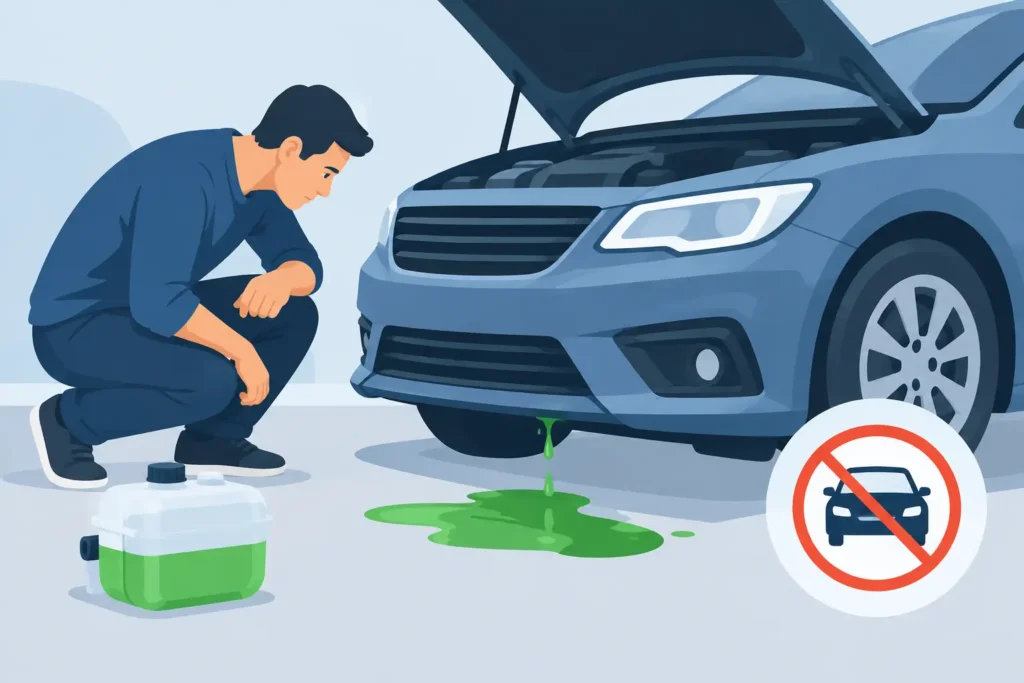
If you suspect a leak, park your vehicle on a level surface and allow the engine to cool before checking fluid levels.
Never remove a radiator or coolant reservoir pressure cap while the engine is hot. Pressurized coolant can cause serious burns.
Check the engine oil level using the procedure described in your owner’s manual. If the coolant reservoir is accessible and the engine is cold, check its level as well.
Avoid driving if the engine is overheating, the oil pressure warning light is on, or coolant or oil is leaking heavily. Continuing to drive under these conditions can cause significant engine damage.
A professional inspection may involve pressure testing the cooling system, cleaning and tracing the leak, or using specialized diagnostic methods to identify the source.
5. Preventing Oil and Coolant Leaks
Regular maintenance can help identify potential problems before they become serious.
Follow the manufacturer’s recommended oil and coolant service intervals, use the correct fluids for your vehicle, and inspect accessible hoses and connections during routine maintenance.
If a leak is found, replacing only the visibly damaged component may not always solve the problem. The underlying cause should also be investigated.
For example, a leaking gasket caused by excessive crankcase pressure may require attention to the PCV system as well.
Keep Your Vehicle Running Smoothly with West Can Auto Parts
Oil and coolant leaks may begin as small warning signs, but identifying the source early can help prevent more serious problems down the road.
Whether you’re looking for replacement gaskets, oil filters, cooling system components or other maintenance parts, West Can Auto Parts is here to help.
With knowledgeable teams and a wide selection of quality auto parts, WCAP helps drivers and automotive professionals find the components they need to keep their vehicles running smoothly.
Visit westcanauto.com to explore our range of auto parts or connect with your local West Can Auto Parts store for assistance.
West Can Auto Parts — Your trusted destination for quality auto parts and expert advice.
Disclaimer:
This blog is for educational and informational purposes only. For accurate diagnosis and proper vehicle repairs, always consult a certified automotive technician.