
| | |

Oil Change Done but Check Engine Light Is On? Try These Solutions

Sharing is Caring

Key Points to Know Before You Start

Before getting into the how-to steps, here are a few important things every driver should understand about a check engine light appearing after an oil change:

  • A check engine light doesn’t always mean something is broken
  • Reset methods include scan tools, dashboard procedures, and battery resets
  • Loose caps, incorrect oil levels, and reminders are common triggers
  • If the light returns quickly, diagnostics are required
  • Using the right oil and a quality filter helps prevent warning lights altogether

Now let’s break down why this happens—and exactly what you can do about it.

Why the Check Engine Light Comes On After an Oil Change

Finishing an oil change only to see the check engine light glowing on the dashboard can feel discouraging. The good news? In many cases, it’s not a serious engine fault.

The check engine light—also called the Malfunction Indicator Lamp (MIL)—is controlled by your vehicle’s onboard computer. It monitors sensors throughout the engine and emissions systems. During an oil change, even small oversights can trigger this light.

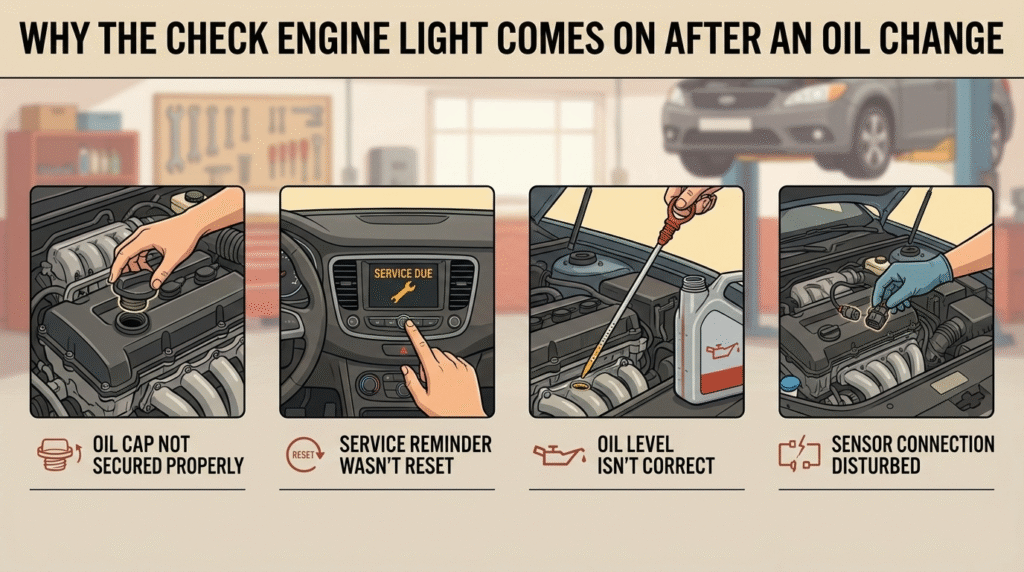
Most Common Reasons After an Oil Change

This is one of the most frequent causes. A loose or damaged oil cap can cause the evaporative emissions system to detect a leak, triggering the light.

Many modern vehicles link oil life monitoring systems to warning lights. If the reminder isn’t reset after service, the light stays on.

Overfilling or underfilling oil can create abnormal pressure readings that the engine computer flags.

While accessing filters or drain plugs, it’s possible to bump a nearby sensor or wiring connector loose.

Understanding these possibilities helps you decide whether you’re dealing with a simple reset—or something that needs attention.

Method 1: Resetting the Check Engine Light with an OBD-II Scanner

Using an OBD-II scanner is the most reliable and professional way to reset a check engine light.

What You’ll Need

  • Basic OBD-II scan tool
  • Vehicle parked safely with ignition off

Most vehicles made after 1996 have an OBD-II port under the dashboard.

Step-by-Step Process

  1. Plug the scanner into the OBD-II port
  2. Turn the ignition to the ON position (engine off)
  3. Scan for stored diagnostic trouble codes
  4. Write down or save the codes
  5. Select “Clear Codes” on the scanner
  6. Start the engine and confirm the light is off

Why this method is best:

It tells you why the light came on before clearing it. If the same code returns, you know it’s not just a reminder.

Method 2: Resetting Without a Scanner (Dashboard Controls)

Some vehicles allow resets using steering-wheel or dash buttons. This works mainly for oil service reminders—not actual faults.

Common General Procedure

  1. Turn the ignition to ON (do not start)
  2. Press the accelerator pedal fully three times within 5 seconds
  3. Turn ignition off
  4. Start the vehicle

Manufacturer Examples

  • Honda / Acura: Hold the “Select/Reset” button until oil life resets
  • Ford: Navigate to oil life via steering controls and reset to 100%
  • GM: Hold trip reset while turning ignition to ON

If the light stays off, it was likely maintenance-related.

Method 3: Disconnecting the Battery (Use with Caution)

Battery disconnection is a traditional reset method, but it comes with trade-offs.

Safety First

  • Wear gloves and eye protection
  • Disconnect the negative terminal only
  • Ensure the engine is cool

Steps

  1. Turn off the vehicle completely
  2. Disconnect the negative battery cable
  3. Wait 15–20 minutes
  4. Reconnect securely
  5. Start the engine and monitor

Important Drawbacks

  • Radio presets and clock reset
  • ECU relearns idle and shifting behavior
  • Not recommended for newer vehicles with advanced electronics

This method should be a last resort.

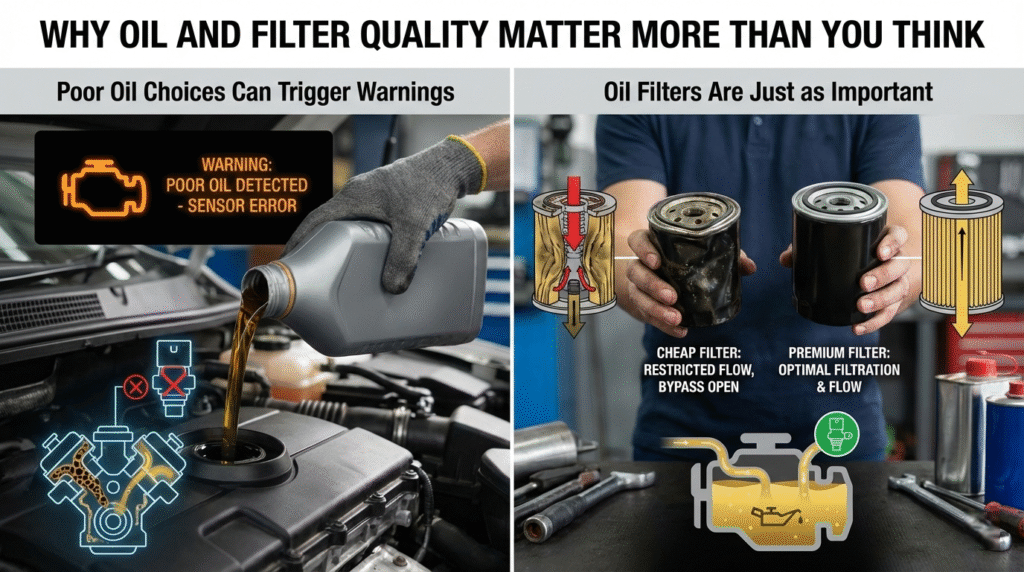
Why Oil and Filter Quality Matter More Than You Think

Oil changes don’t just lubricate your engine—they directly affect sensor readings.

Poor Oil Choices Can Trigger Warnings

Incorrect viscosity or low-grade oil can cause:

  • Abnormal oil pressure
  • Inconsistent temperature readings
  • Reduced oil flow

Oil Filters Are Just as Important

Low-quality filters may restrict oil circulation, triggering pressure-related codes. A premium filter ensures steady flow and clean lubrication.

Using the right oil and filter combination dramatically reduces the chance of post-service warning lights.

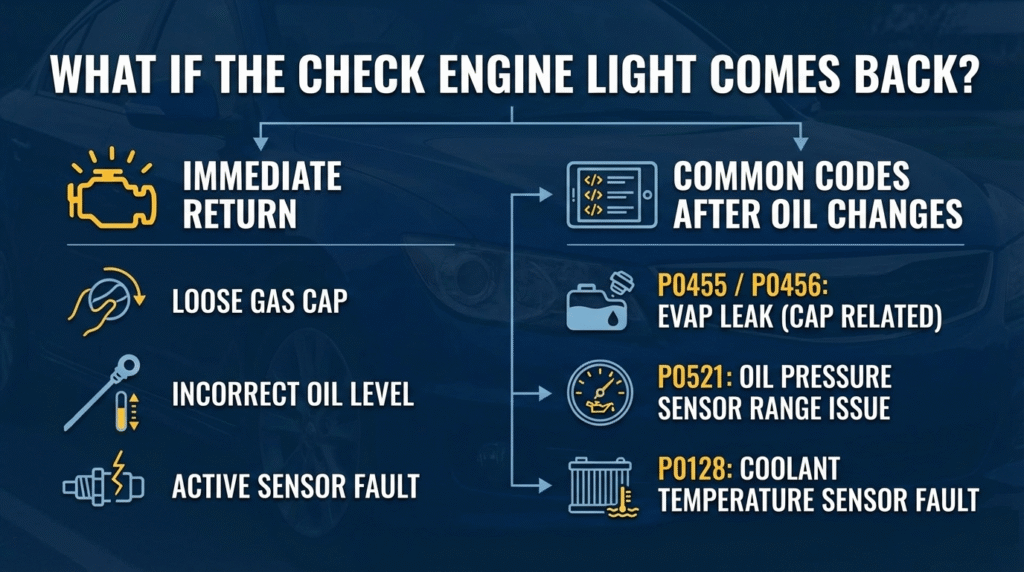
What If the Check Engine Light Comes Back?

If the light returns shortly after resetting, it’s signaling a real issue.

Immediate Return

  • Loose gas cap
  • Incorrect oil level
  • Active sensor fault

Common Codes After Oil Changes

  • P0455 / P0456: EVAP leak (cap related)
  • P0521: Oil pressure sensor range issue
  • P0128: Coolant temperature sensor fault

If performance issues appear or multiple codes are present, professional diagnostics are recommended.

Preventing Check Engine Lights During Future Oil Changes

Before You Start

  • Confirm correct oil type and capacity
  • Inspect oil cap seal
  • Have a new drain plug washer ready

During the Oil Change

  • Hand-thread drain plug and filter
  • Avoid overtightening
  • Keep sensors and wiring undisturbed

After the Oil Change

  • Start engine and confirm oil pressure light clears
  • Check for leaks
  • Recheck oil level after 5 minutes
  • Take a short test drive

These habits prevent most post-service issues.

Final Thoughts: Smarter Maintenance Means Fewer Warning Lights

Resetting a check engine light after an oil change is often simple—but understanding why it came on is what truly matters. Whether you use a scanner, dashboard reset, or battery disconnection, always rule out underlying causes before clearing codes.

Consistent maintenance, correct oil specifications, and high-quality filters go a long way in keeping warning lights off and engines running smoothly.

For drivers who want dependable parts and professional-grade maintenance supplies, West Can Auto Parts offers premium engine oils, trusted oil filters, and the tools needed to do the job right the first time. With the right components, you’re not just changing oil—you’re protecting your engine for the long haul.

Disclaimer:

This blog is for educational and informational purposes only. For accurate diagnosis and proper vehicle repairs, always consult a certified automotive technician.

Similar Posts

Leave a Reply

Your email address will not be published. Required fields are marked *